
The First 100 Days as a CFO
A CFO's Roadmap to Strategic Impact

Why Your First 100 Days as CFO Matter More Than Ever
The first 100 days in the CFO seat represent a decisive inflection point — the period where your credibility is either firmly established or quietly undermined.
The Stakes Are High: CFO turnover reached 17.8% among S&P 500 companies last year, the highest rate in six years, with global turnover holding at 15.1%, just shy of record levels.
A disciplined 100-day plan ensures you don't become part of that statistic. It allows you to quickly assess the landscape, identify immediate risks, and secure early wins that build trust with your CEO, board, investors, and the organization as a whole.
This roadmap guides you through a proven framework — Assess, Define, Deliver, Sustain — to balance short-term control with long-term strategic impact.
Want to jump ahead? Download the roadmap
We’ll never spam you or share your email address.
The ADDS Framework
The modern CFO role extends far beyond traditional finance. Today, it demands equal parts strategist, communicator, operator, and transformation leader. Success increasingly hinges on non-financial competencies: clear communication, organizational agility, and the ability to lead through ambiguity.
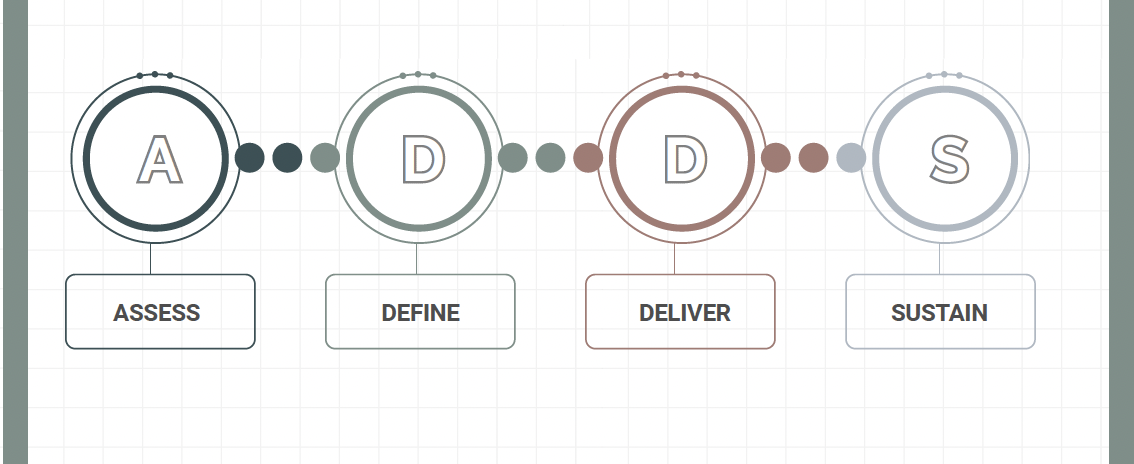
Days 1-30: ASSESS
Listen, Learn, and Diagnose
Your first month is about establishing situational awareness, credibility, and control. This is when you absorb more than you act — listening closely, asking precise questions, and uncovering the realities behind the numbers.
Key Activities
Assess the Organization's Financial Position
Identify Key Stakeholders and Build Trust
Conduct Enterprise-Wide Risk Management
Benchmark Performance
Identify Operational Quick Wins
Quick Wins to Build Momentum:
Fix one visible pain point — listening then taking action quickly earns internal trust
Send a short "State of Finance" report to stakeholders with honest, direct findings
Meet 1:1 with all direct reports to quickly establish working relationships
Days 31-60: DEFINE
Vision and Financial Strategy
Once you complete your foundational assessment, spend the next 30 days shaping direction and setting the strategic tone. This is when you translate insight into intention and develop a clear finance vision that aligns with the company's broader objectives.
Key Activities
Develop your Vision for the Finance Organization
Establish Financial Planning Rigor
Benchmark and Calibrate Performance
Enhance Operational Efficiencies
Watch Out For:
"Strategic planning workshops" that don't focus on delivering results
Sunk costs — don’t continuing to invest in models, strategies, and tools that haven't shown net positive returns
Trying to please everyone. You won't, and that's not your job
Days 61-100: DELIVER
Execute Your Plans
With a clear understanding of the organization and a defined financial agenda, your focus now shifts to demonstrating measurable progress and embedding governance that will sustain long-term value creation.
This is the moment to narrow your scope to the three priorities that matter most. Focus on data and reporting discipline, cash control, and team accountability.
Key Activities
Prioritize and Implement Financial Improvements
Show Measurable Results
Formalize Governance, Compliance and Controls
Enhance Operational Efficiencies
Now is the time to conduct a 100-day review with your CEO
Focus on your early impact and clearly define the metrics against which you'll be measured.
Beyond Day 100: SUSTAIN
Provide Measurable Results
Beyond the 100-day mark, your role shifts from building momentum to sustaining and amplifying it. This is where reactive execution evolves into proactive, future-focused leadership.
Key Activities
Instill Improvements as Business-as-Usual
Monitor and Report with Discipline
Prepare for Next-Level Initiatives
Refine Operational Processes
Ready to Execute Your First 100 Days with Precision?
Download the complete CFO Roadmap and explore Keene Advisors’ advisory solutions and digital finance tools to accelerate your success.
We’ll never spam you or share your email address.